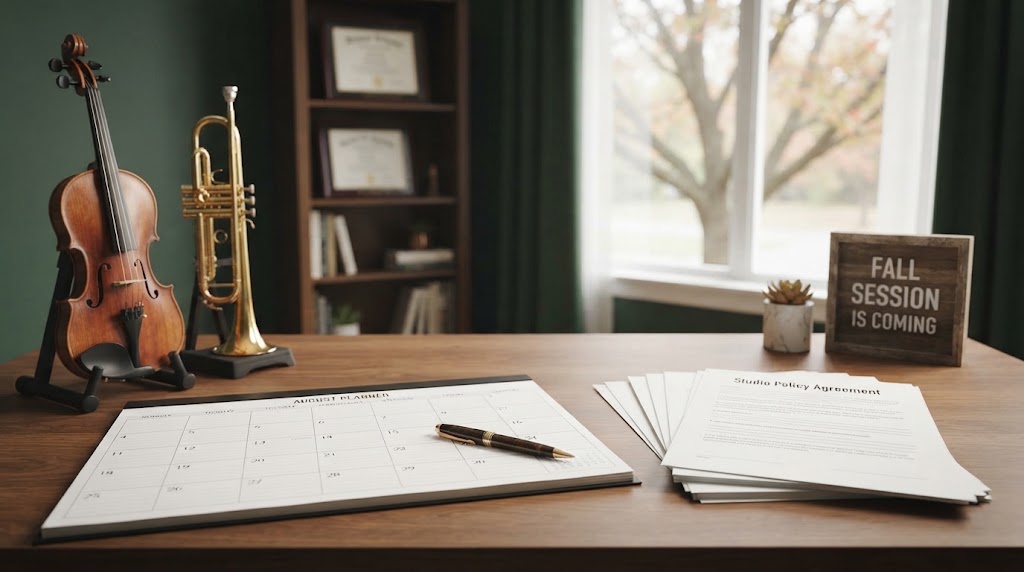
Late summer is a busy time for private music teachers. August and September are the most important months of the year to secure your schedule, lock in commitments, and make sure your studio roster is full before school sports and activities fill up family calendars.
If you wait until school starts, you will lose students to other after-school programs. Taking action right now puts you in control of your schedule, your boundaries, and your income.
Here is how to set up, price, and market your private teaching studio for a successful fall term.
📅 1. Lock in Returning Students First
The easiest way to fill your schedule is to start with your current students. Before you take on new inquiries, make sure your regular students have confirmed their lesson times for the new term.
Send a quick reminder: Email or text parents and adult students to lock in their weekly time slot by a set date.
Set a deadline: Give families a clear cutoff so you can open remaining hours to your waitlist.
💰 2. Set Your Rates and Choose Your Pricing Model
Moving your studio to a flat monthly tuition model is the single best business decision you can make.
The Monthly Tuition Formula: Instead of charging per lesson or managing rigid quarterly blocks, take your total annual lesson count, divide it into equal monthly payments, and bill on the first of the month. This guarantees steady income for you and simple budgeting for families, regardless of holidays or vacations.
Concrete Rate Examples: Private instruction is standardly billed by time blocks:
30-Minute Lessons for young beginners: $30 to $45 per lesson
45-Minute Lessons for intermediate students: $45 to $65 per lesson
60-Minute Lessons for advanced students and adults: $60 to $90+ per lesson
New versus Established Teachers: If you are building your studio from scratch, price yourself near the lower middle of local music school rates to build momentum. If you have degrees, professional performing experience, or specialized expertise like advanced brass or conservatory preparation, do not underprice yourself. Charge toward the higher end of the market.
🤝 3. Handling Trial Lessons
It is generally best to avoid free or deeply discounted trial lessons. Bargain hunting trials often attract clients who fail to respect your time or drop out quickly.
The Paid Trial Approach: Offer a standard rate single lesson with no ongoing obligation. This filters for serious students and establishes your professional worth from minute one.
The Smart Incentive: Instead of cutting your lesson price, offer a small perk like a waived registration fee only if they commit to the monthly tuition program during or right after their trial.
📝 4. Get Paid in Advance and Use a Contract
Nothing wastes a teacher’s time faster than chasing missed payments or arguing over cancellation rules.
Automate Payments: Set up pre-authorized debits, e-transfers, or automatic billing due strictly on the first of every month in advance.
Use a Studio Policy Agreement: Every student or parent should sign a concise agreement before their first lesson covering attendance rules, makeup policies, and a 30-day cancellation notice. (Note: Complete, professional Studio Policy Agreement templates will be available for download inside the Musicians Guild International member area).
🌐 5. Decide on In-Person versus Online
Offer both if you can. In-person lessons are ideal for younger beginners or advanced wind players where acoustics, posture, and physical demonstration matter most. However, offering online options opens up your market geographically beyond your immediate neighborhood.
🎶 6. Connect with Local Music Stores
Band and orchestra directors, along with local instrument retail stores, are your best partners for finding eager students.
Store Partnerships: Drop off professional business cards or a clean flyer at local music stores. Store staff are constantly asked by parents for reliable private teachers and love having someone to recommend.
School Outreach: Contact local music teachers as the school year starts to let them know your availability for section players, especially on instruments like the French horn and low brass where specialized instruction is vital.
🚀 7. Where to Advertise in the US and Canada
If you still have open slots after re-enrolling current students, cast a wider net in your local market using these proven platforms:
Local Classifieds and Marketplaces: In Canada, Kijiji is the premier platform for local services. In the United States, Craigslist or Nextdoor serve the exact same purpose for finding local families looking for private instruction.
Facebook Community Groups: Post regularly in neighborhood community and parent groups rather than spamming your personal profile.
Google Business Profile: Set up a free Google Business Profile for your teaching studio. When parents search for music lessons in your city, a localized profile with solid reviews brings high-intent traffic directly to you. (Skip eBay because it is meant for physical goods, not local professional services).
Final Thoughts
A full teaching studio takes early planning and solid boundaries. By confirming your current students, setting confident rates, switching to flat monthly tuition, and marketing locally, you can start the fall semester with a smooth schedule and complete peace of mind.
📬 Join the Musicians Guild International Community
Never miss an update or career guide. Click here to join our newsletter and get independent music career advice delivered straight to your inbox.

Author: Guy Edrington
Freelance French Horn available for performance and teaching engagements. I specialize in studio/remote session work, chamber music, recitals, and ensemble performance (orchestra, opera, ballet, musicals). Also offering private lessons and masterclasses, online or in-person.