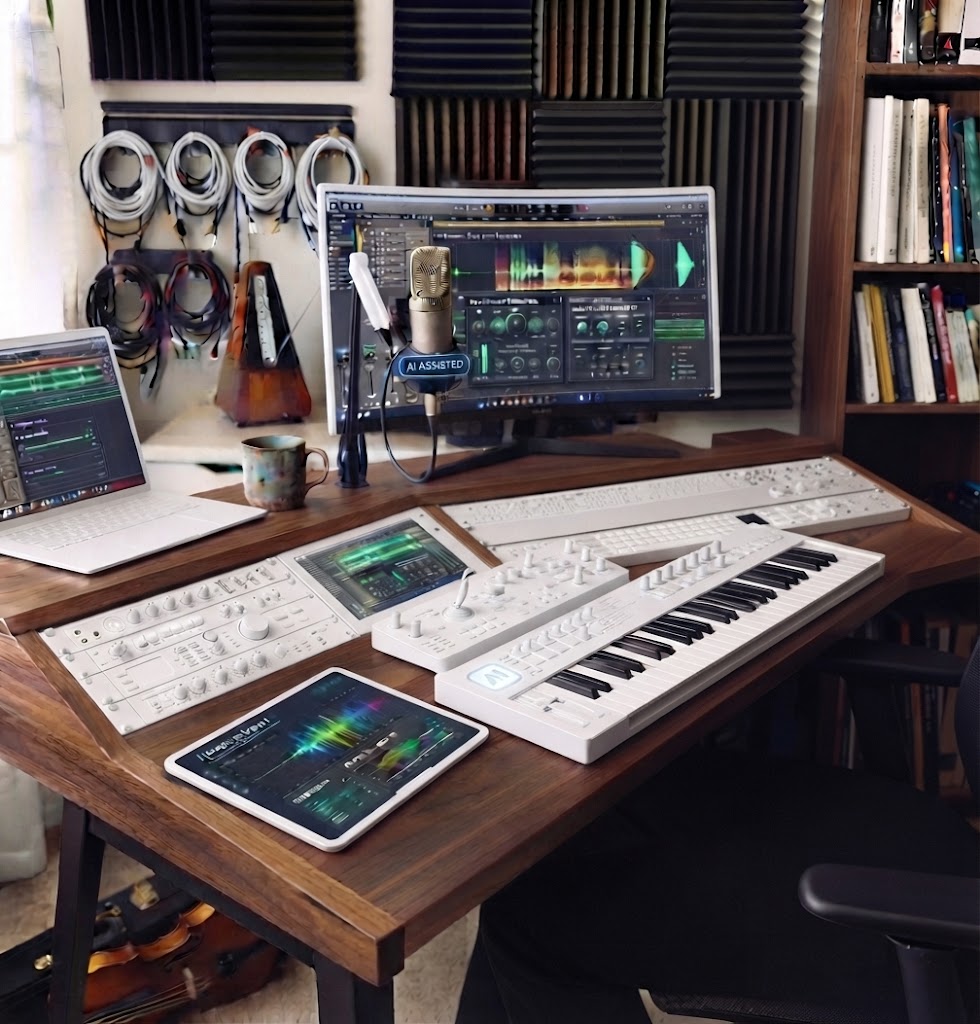
AI is becoming a massive part of the modern musician’s toolkit, but the way creators are actually using it looks a lot different from what the mainstream headlines suggest.
A recent global study by research firm Water & Music and the AI audio platform Moises surveyed 1,525 musicians to look past the hype and see how people are really applying AI across practice, production, and professional work. The data revealed that 78% of professional musicians had used AI for music-related work over the previous year, compared to 60% of hobbyists.
It is worth noting that the study covers creators across a broad range of disciplines—from instrumentalists and vocalists to producers and educators. And the ways they are putting these tools to work might surprise you.
AI Is For Practice, Not Just Full-Song Generation
One of the most interesting takeaways from the report is that generating entire songs out of thin air is not what most musicians are doing.
Instead, the unglamorous, practical tasks lead the pack:
Stem separation topped the list, with 71% of AI users using it to isolate vocals or instruments.
Practice and skill development came in next at 44%.
Accompaniment and backing tracks sat at 40%.
Full-song generation lagged far behind at just 24%.
For instrumentalists and singers, these tools are functioning much like high-tech practice partners—helping you pull apart difficult recordings, isolate individual parts, and build backing tracks to rehearse with. This is what I do for myself practicing vocals and also with my French horn.
Pros Are Leading the Adoption
The study also highlighted a clear gap between casual users and working professionals. Not only do 78% of pros use AI, but they are also twice as likely to invest $50 or more a month into specialized tools. For myself I mainly use free versions.
When you rely on music for your livelihood, you view tech through a pragmatic lens. If a tool saves time or helps solve a real creative roadblock, it earns a spot in the workflow. In fact, 40% of survey respondents noted that AI helped them learn more songs, 33% used it to experiment with new genres, and 30% improved their overall production quality.
The Human Element Still Comes First
Even with high adoption rates, musicians aren’t looking to hand over the steering wheel. Valid concerns remain: 58% of surveyed users cited authenticity as a major worry, and 55% pointed to copyright and licensing questions.
The overarching takeaway is that AI doesn’t replace the artist, it supports them. For players, singers, and producers, the real conversation isn’t about robots taking over the bandstand. It is about figuring out how to use modern tech to sharpen our skills without ever losing the human heart and performance at the center of the music.
Want to dive deeper into the data mentioned here? You can explore the full insights over at Moises. https://moises.ai/
Stay Ahead of the Curve
Get more practical tips, industry insights, and musician resources straight to your inbox.
👉 Never miss an update or career guide. Click here to join our newsletter and get independent music career advice delivered straight to your inbox.

Author: Guy Edrington
Freelance French Horn available for performance and teaching engagements. I specialize in studio/remote session work, chamber music, recitals, and ensemble performance (orchestra, opera, ballet, musicals). Also offering private lessons and masterclasses, online or in-person.