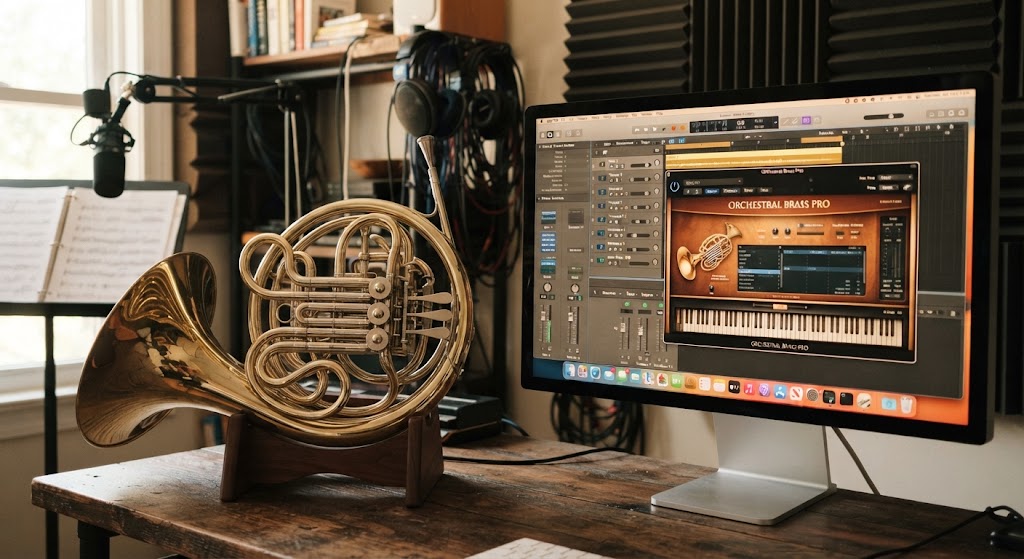
Hey folks, Let’s be honest. If you talk to players down in the session trenches or working remote multi-track dates these days, the talk always drifts to the same thing: artificial intelligence and software instruments like that free BBC Spitfire library which sounds great and that’s the free version. Thank God the sound of the French Horns are not that realistic. Good for me!
“I’ve spent over forty years playing everything from orchestras, solos, recitals and even two years of Les Misérables at the Royal Alex in Toronto to chamber gigs, studio work and remote recording sessions.
Back when I was studying at FSU a million years ago, up in Oslo, or playing across Canada and the US, “technology” just meant a cleaner mic or a better tape machine. Today, a producer can pull up software and generate a full, frighteningly realistic brass section before they even finish their morning coffee.
For session and remote recording players, the question isn’t just about art anymore. It is a direct threat to workflow: How do we compete when a computer can spit out a passable track in ten seconds for free?
Here is my take.
If your goal as a session player is to record tracks that sound like a human metronome, perfectly in time and entirely safe, you are in trouble. Computers do that faster and cheaper.
Sure, music has plenty of math built right into it with rhythms, intervals, and counting. But a great recorded track isn’t just an equation to solve. When I’ve laid down tracks for sessions, the magic comes from the subtle human choices, the feel, and the interpretation that give a chart real life.
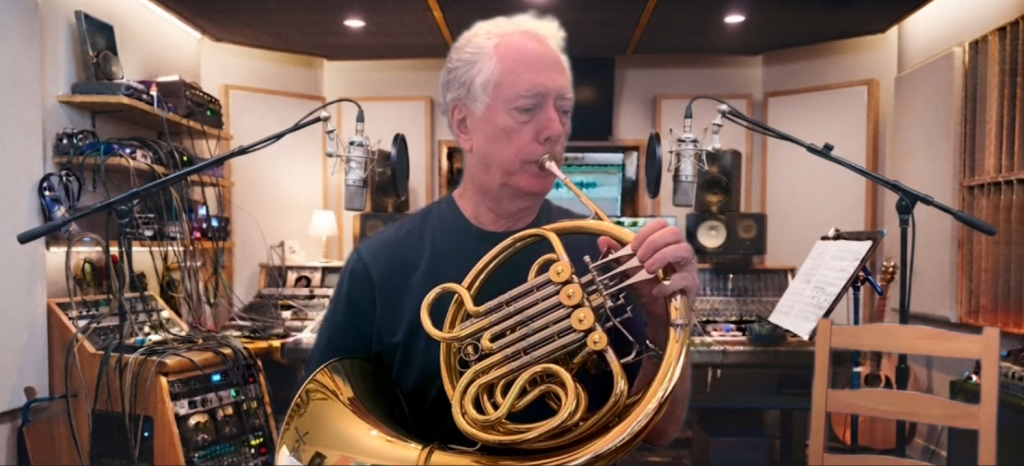
Live concerts, orchestras, and recitals are a completely different animal, and that is where the magic happens because of how we play together and an audience watching real humans take a risk. In fact, when playing live, I have always found it is not a bad idea to miss a note every now and then just to get the audience’s attention, because I think people kind of go into a trance otherwise.
Sure, software is fine for a quick scratch track or a basic demo. But when a project needs actual soul, synthetic tracks hit a wall:
Interpretation: A machine plays data. A human player interprets a phrase based on the studio vibe, the producer’s notes, or what the other players just laid down.
Ensemble Breath: Real players breathe together, blend, and adjust intonation on the fly. That little bit of natural friction is what makes a recorded section sound warm and alive instead of plastic.
Connection: Producers hire people they trust to deliver under pressure. Music is a collaborative craft, not a spreadsheet.
How Do We Actually Get the Gig?
Let’s be realistic about the money, too. When union scales are miles higher than what clients are actually willing to spend, and 90% of the work has dried up, quoting top-dollar just prices you right out of the room. Nearly all of us are playing part-time these days just to keep our hand in it, and nobody is making a living from performing alone. Do you know anyone who makes a good living just for playing? Even in Mozart’s time musicians had to have other jobs to survive. Leugit who he wrote concertos for owned a cheese shop.
You have to be flexible with your pricing to stay in the game. But winning the gig comes down to finding that sweet spot where you are affordable to a working producer, while still making your time worth the effort:
Price for the Project: An indie game developer or a songwriter working on a tight budget can’t pay major-label rates. Setting a realistic per-track or hourly rate that fits modern project budgets is how you actually land the work.
Sell Your Reliability: Producers aren’t just looking at the price tag; they are looking at headaches. If you can deliver clean audio tracks fast without needing a dozen revisions, you become their go-to person.
Lean Into Your Personal Sound: A sample library gives you an average, robotic section. Clients come to you because your actual horn playing adds character they can’t get from a plugin.
We don’t need to fear technology, but we shouldn’t try to out-calculate it either. Our job as session players isn’t to be cheaper than software. It’s to offer real artistry and reliability.
That’s why we built Musicians Guild International. To give independent session and live players the tools and community we need so we can focus on what matters: playing real music.
Are you running into clients opting for virtual tracks, or are you finding that people still value the real thing? We will also be adding practical outreach emails here that you can use to help land the gig.
I hope this was useful information for you. Be sure to tell your friends about our new guild.
Guy Edrington
Independent Musician & Fellow Traveler

Author: Guy Edrington
Freelance French Horn available for performance and teaching engagements. I specialize in studio/remote session work, chamber music, recitals, and ensemble performance (orchestra, opera, ballet, musicals). Also offering private lessons and masterclasses, online or in-person.